Buy baubuero.eu ?
We are moving the project
baubuero.eu .
Are you interested in purchasing the domain
baubuero.eu ?
domain@kv-gmbh.de · 0541-91531010
Buy baubuero.eu ?
What is better, product design or interior architecture?
The answer to whether product design or interior architecture is better ultimately depends on personal interests and career goals. Product design involves creating tangible objects that serve a specific function, while interior architecture focuses on designing interior spaces that enhance the user experience. Both fields offer unique opportunities for creativity and innovation, so it is important to consider which aligns more with your passions and strengths. Ultimately, the decision between product design and interior architecture should be based on individual preferences and career aspirations. **
How can one study architecture or interior design?
One can study architecture or interior design by enrolling in a formal education program such as a bachelor's or master's degree in architecture or interior design at a university or college. These programs typically cover design principles, building technology, history of architecture, and practical skills such as drafting and computer-aided design. Additionally, gaining practical experience through internships or apprenticeships with established architects or designers can provide valuable hands-on learning opportunities. Networking with professionals in the field and attending workshops, conferences, and exhibitions can also help in expanding one's knowledge and skills in architecture or interior design. **

Similar search terms for Learning-Resources-Design-Drill
Top-Angebote
Products related to Learning-Resources-Design-Drill:
-
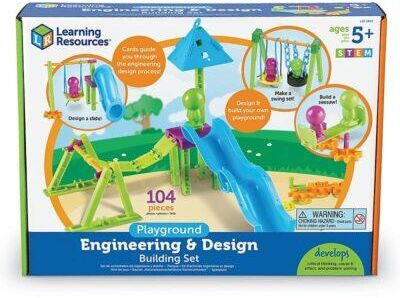
Learning Resources Playground Engineering & Design KitEncourage your child to come up with their own designs or they can follow the Challenge Cards, which include how to build different pieces of equipment on a playground (a twisty slide, a swing set, a seesaw, and more). Reproducible worksheets based...29,99 $*Shipping: 0,00 $Secure redirect to the provider
-
Learning Resources Design ; Drill Bolt-It Bucket for Kids - Includes Drill, Bolts, and Storage Bucket - Ages 3 and UpUnleash your child's creativity with the Learning Resources Design Drill Bolt-It Bucket. This vibrant, hands-on toy is designed to spark imaginative play while enhancing fine motor skills and problem-solving abilities. Perfect for budding engineers and builders, it includes colorful bolts and a drill for endless creative combinations, a durable storage bucket that makes clean-up a breeze, and a sturdy drill that actually spins. Children can build anything from simple patterns to complex structures, all while engaging in imaginative play that boosts their confidence and cognitive skills.28,20 £*Shipping: 3,95 £Secure redirect to the provider
-
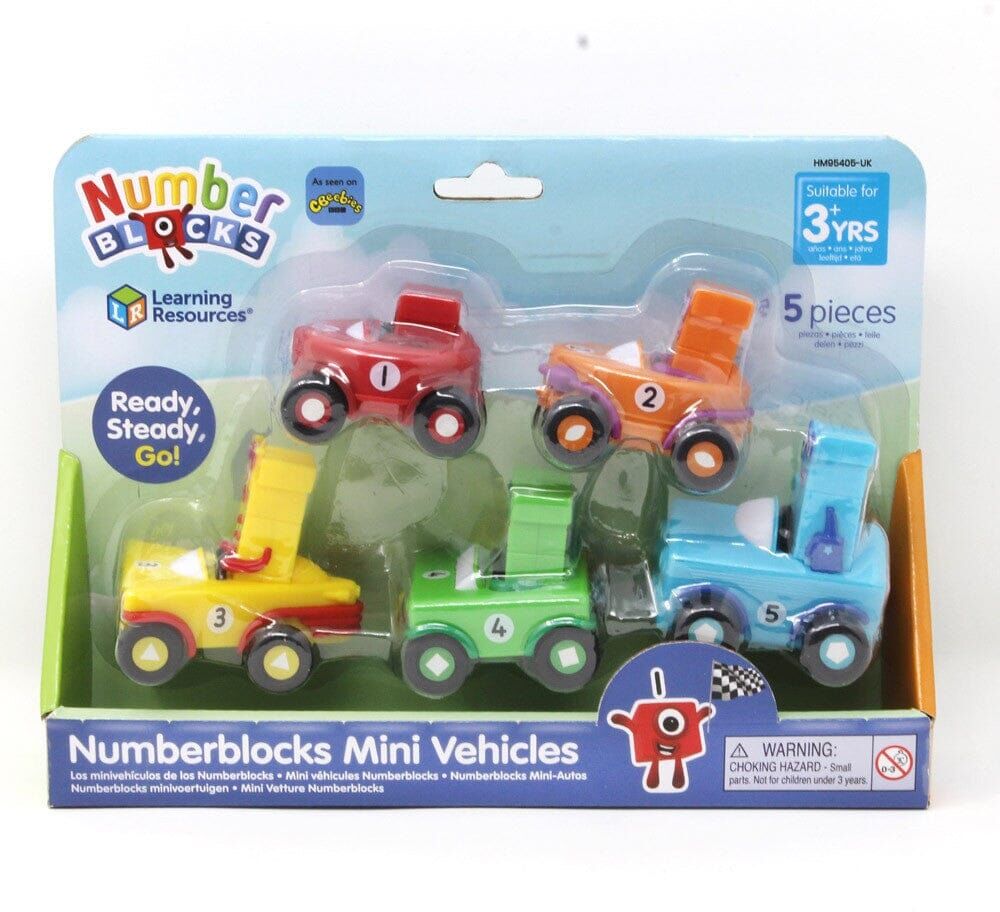
Numberblocks Mini Vehicles Set By Learning Resources - Ages 3+ Learning ResourcesDescription: 5, 4, 3, 2, 1… Let’s go! Have fun zooming around Numberland on imaginative play adventures with Numberblocks One to Five in their Numberblocks Mini Vehicles. Just like its driver, each of the 5 vehicles has unique maths details so there’s learning at every turn: One’s vehicle has 1 headlight Count Two’s headlights and two corners Count the corners on Three’s triangular-shaped vehicle Four’s square vehicle has 4 headlights and 4 corners Count the 5-pointed star on the back of Five’s pentagonal vehicle. Rolling wheels let children push and roll One to Five to all sorts of imaginative play destinations and even race against each other. The drivers stay in their vehicles so they’re always ready to go.20,99 £*Shipping: 2,99 £Secure redirect to the provider
-
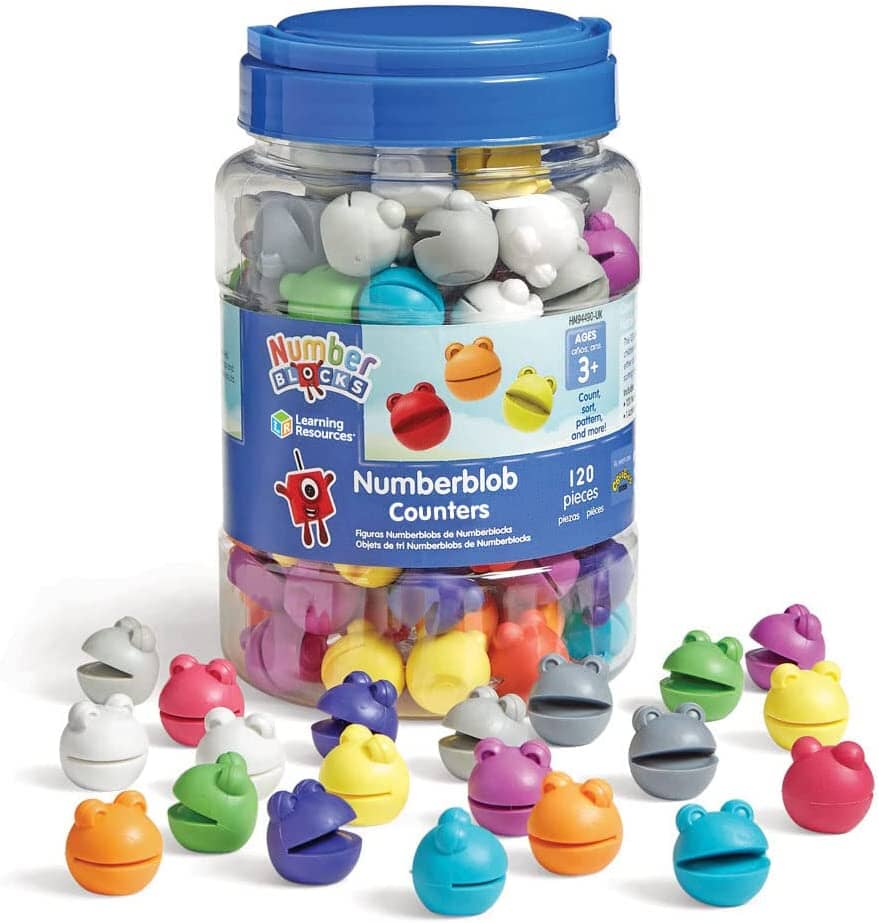
Numberblocks Numberblob Counters Set by Learning Resources - Ages 3 Years+ Learning ResourcesNUMBERBLOCKS AS SEEN ON TV: Bring the magic of on-screen maths learning with the Numberblocks TV series to life in the classroom with these Numberblocks Numberblob Counters VERSATILE TEACHING RESOURCE: Use these counters for teaching a range of essential early years maths skills including counting, sequencing, grouping, patterning, sorting, addition, subtraction, subitising, cardinality, and more MULTIPLE WAYS TO SORT: Numberblob Counters have open and closed mouth poses, and shapes on the bottom of the counters and are ideal for a variety of sorting activities FUN TO USE: These adorable Numberblob Counters are made from high-quality, soft, durable plastic that children will enjoy handling; counters are easy to wipe clean, and store neatly in the convenient storage tub with carry handle INCLUDES: 120 counters in fun Numberblocks unique colours – white, yellow, light orange, dark pink, red, turquoise, blue, purple, green, light grey, and dark grey, plus teacher-developed guide; counters measure 2cm in diameter14,99 £*Shipping: 2,99 £Secure redirect to the provider

-
What is the difference between interior architecture and interior design?
Interior architecture focuses on the structural and spatial elements of a space, including the layout, flow, and functionality. It involves designing and coordinating the interior structure of a building, such as walls, ceilings, and floors. On the other hand, interior design focuses on the aesthetics and decorative aspects of a space, including furniture, color schemes, and accessories. It involves creating a cohesive and visually appealing environment that reflects the client's needs and style preferences. While interior architecture deals with the physical structure of a space, interior design focuses on the visual and decorative elements. **
-
How can one best start learning design?
One of the best ways to start learning design is by taking online courses or enrolling in a design program at a college or university. It's also helpful to practice regularly and seek feedback from experienced designers. Additionally, studying the work of established designers and staying updated on design trends can provide valuable insights. Finally, getting hands-on experience through internships or freelance projects can help to apply and refine newly acquired skills. **
-
Do you prefer interior design or graphic design?
As an AI, I don't have personal preferences. However, both interior design and graphic design are important and have their own unique appeal. Interior design focuses on creating functional and aesthetically pleasing spaces, while graphic design involves creating visual concepts to communicate ideas. Both fields require creativity and attention to detail, and each offers its own set of challenges and opportunities for artistic expression. **
-
How can one transition from interior design to architecture?
One can transition from interior design to architecture by pursuing further education and obtaining a degree in architecture. This will provide a deeper understanding of structural design, building systems, and construction methods. Additionally, gaining experience in architectural firms or working on architectural projects can help in making the transition. It is also important to develop a strong portfolio that showcases architectural design skills and knowledge. Networking with architects and seeking mentorship can also be beneficial in making the transition from interior design to architecture. **
What is the difference between interior design and architecture?
Interior design focuses on the aesthetic and functional aspects of the interior spaces within a building, including furniture, color schemes, and decor. It involves creating a cohesive and visually appealing environment that meets the needs and preferences of the occupants. On the other hand, architecture is the art and science of designing and constructing buildings and other physical structures. It encompasses the overall design, structural integrity, and functionality of the entire building, including the exterior and interior spaces. While interior design focuses on the interior environment, architecture encompasses the entire built environment. **
How can one switch from studying architecture to interior design?
To switch from studying architecture to interior design, one can start by researching the specific requirements and courses needed for a degree in interior design. It may be necessary to take additional classes or pursue a new degree program focused on interior design. Building a portfolio that showcases relevant skills and projects related to interior design can also help in making the transition. Networking with professionals in the interior design field and seeking internships or job opportunities in interior design firms can provide valuable experience and connections. **
Top-Angebote
Products related to Learning-Resources-Design-Drill:
-
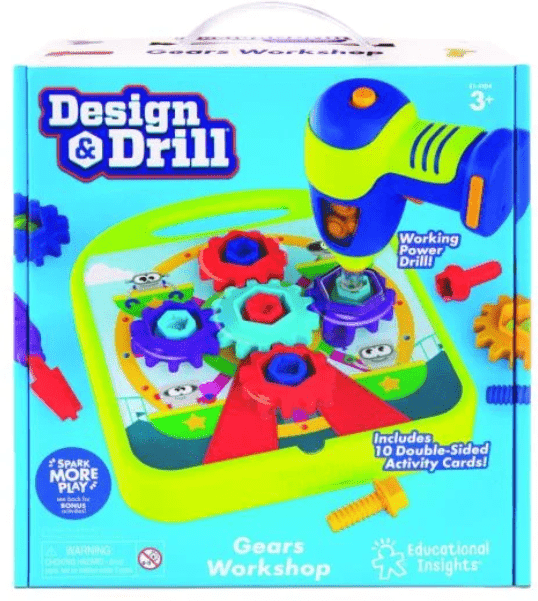
Learning Resources Design ; Drill Gears Workshop for Kids, 56-Piece STEM Set with Power Drill and GearsFuel your child's curiosity and creativity with the Learning Resources Design and Drill Gears Workshop. This hands-on STEM set is perfect for budding engineers, letting kids use a real working power drill and colorful gears to create exciting, twisting chain reactions. With 56 pieces, including bolts, gears, and a sturdy activity board with a carry handle, children can develop fine motor skills and spatial awareness as they build and experiment. The double-sided pattern cards provide fun design ideas, or kids can use their imagination to create unique creations. This engaging set is a great way to introduce engineering basics in a fun and approachable way.27,50 £*Shipping: 3,95 £Secure redirect to the provider
-
Learning Resources Design ; Drill Robot - Build-Your-Own Robot Set for Kids - Ages 3+Bring engineering fun to playtime with the Learning Resources Design and Drill Robot. Perfectly sized for little hands, this build-your-own robot set lets young engineers assemble their colorful robot using a chunky, kid-friendly screwdriver. With a swiveling head, movable arms, and vibrant bolts, kids can personalize their creation with the included stickers, making each robot truly one-of-a-kind. As they put the pieces together, children build fine motor skills, hand-eye coordination, and an understanding of matching and patterns—all through play. Standing 20cm tall when assembled, this robot is ready for imaginative adventures. A great gift for curious minds, it's a fun way to learn about engineering and creativity.14,09 £*Shipping: 3,95 £Secure redirect to the provider
-
Learning Resources Playground Engineering & Design KitEncourage your child to come up with their own designs or they can follow the Challenge Cards, which include how to build different pieces of equipment on a playground (a twisty slide, a swing set, a seesaw, and more). Reproducible worksheets based...29,99 $*Shipping: 0,00 $Secure redirect to the provider
-
Learning Resources Design ; Drill Bolt-It Bucket for Kids - Includes Drill, Bolts, and Storage Bucket - Ages 3 and UpUnleash your child's creativity with the Learning Resources Design Drill Bolt-It Bucket. This vibrant, hands-on toy is designed to spark imaginative play while enhancing fine motor skills and problem-solving abilities. Perfect for budding engineers and builders, it includes colorful bolts and a drill for endless creative combinations, a durable storage bucket that makes clean-up a breeze, and a sturdy drill that actually spins. Children can build anything from simple patterns to complex structures, all while engaging in imaginative play that boosts their confidence and cognitive skills.28,20 £*Shipping: 3,95 £Secure redirect to the provider
-
What is better, product design or interior architecture?
The answer to whether product design or interior architecture is better ultimately depends on personal interests and career goals. Product design involves creating tangible objects that serve a specific function, while interior architecture focuses on designing interior spaces that enhance the user experience. Both fields offer unique opportunities for creativity and innovation, so it is important to consider which aligns more with your passions and strengths. Ultimately, the decision between product design and interior architecture should be based on individual preferences and career aspirations. **
-
How can one study architecture or interior design?
One can study architecture or interior design by enrolling in a formal education program such as a bachelor's or master's degree in architecture or interior design at a university or college. These programs typically cover design principles, building technology, history of architecture, and practical skills such as drafting and computer-aided design. Additionally, gaining practical experience through internships or apprenticeships with established architects or designers can provide valuable hands-on learning opportunities. Networking with professionals in the field and attending workshops, conferences, and exhibitions can also help in expanding one's knowledge and skills in architecture or interior design. **
-
What is the difference between interior architecture and interior design?
Interior architecture focuses on the structural and spatial elements of a space, including the layout, flow, and functionality. It involves designing and coordinating the interior structure of a building, such as walls, ceilings, and floors. On the other hand, interior design focuses on the aesthetics and decorative aspects of a space, including furniture, color schemes, and accessories. It involves creating a cohesive and visually appealing environment that reflects the client's needs and style preferences. While interior architecture deals with the physical structure of a space, interior design focuses on the visual and decorative elements. **
-
How can one best start learning design?
One of the best ways to start learning design is by taking online courses or enrolling in a design program at a college or university. It's also helpful to practice regularly and seek feedback from experienced designers. Additionally, studying the work of established designers and staying updated on design trends can provide valuable insights. Finally, getting hands-on experience through internships or freelance projects can help to apply and refine newly acquired skills. **
Similar search terms for Learning-Resources-Design-Drill
-
Numberblocks Mini Vehicles Set By Learning Resources - Ages 3+ Learning ResourcesDescription: 5, 4, 3, 2, 1… Let’s go! Have fun zooming around Numberland on imaginative play adventures with Numberblocks One to Five in their Numberblocks Mini Vehicles. Just like its driver, each of the 5 vehicles has unique maths details so there’s learning at every turn: One’s vehicle has 1 headlight Count Two’s headlights and two corners Count the corners on Three’s triangular-shaped vehicle Four’s square vehicle has 4 headlights and 4 corners Count the 5-pointed star on the back of Five’s pentagonal vehicle. Rolling wheels let children push and roll One to Five to all sorts of imaginative play destinations and even race against each other. The drivers stay in their vehicles so they’re always ready to go.20,99 £*Shipping: 2,99 £Secure redirect to the provider
-
Numberblocks Numberblob Counters Set by Learning Resources - Ages 3 Years+ Learning ResourcesNUMBERBLOCKS AS SEEN ON TV: Bring the magic of on-screen maths learning with the Numberblocks TV series to life in the classroom with these Numberblocks Numberblob Counters VERSATILE TEACHING RESOURCE: Use these counters for teaching a range of essential early years maths skills including counting, sequencing, grouping, patterning, sorting, addition, subtraction, subitising, cardinality, and more MULTIPLE WAYS TO SORT: Numberblob Counters have open and closed mouth poses, and shapes on the bottom of the counters and are ideal for a variety of sorting activities FUN TO USE: These adorable Numberblob Counters are made from high-quality, soft, durable plastic that children will enjoy handling; counters are easy to wipe clean, and store neatly in the convenient storage tub with carry handle INCLUDES: 120 counters in fun Numberblocks unique colours – white, yellow, light orange, dark pink, red, turquoise, blue, purple, green, light grey, and dark grey, plus teacher-developed guide; counters measure 2cm in diameter14,99 £*Shipping: 2,99 £Secure redirect to the provider
-
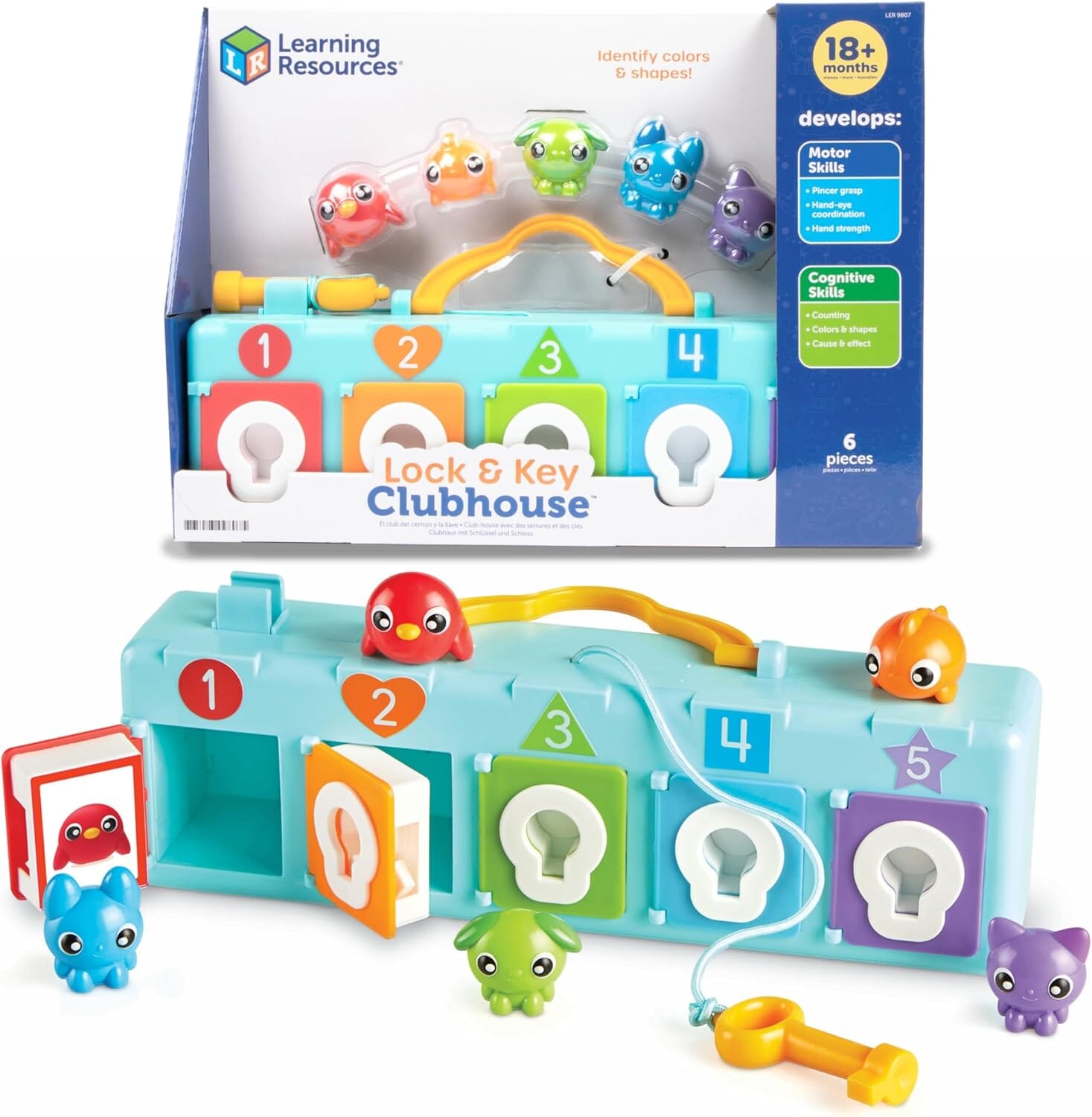
Learning Resources Lock & Key Clubhouse - Ages 18 Months+ - Educational Toy Learning ResourcesKeeping energetic toddlers engaged without handing them a smartphone or tablet can be a daily challenge for modern parents. Fast-paced digital games and flashing screens can easily lead to overstimulation, short attention spans, and bedtime struggles. Toddlers learn best through active touch, physical manipulation, and tactile problem-solving that directly builds finger strength and coordination. Finding an educational toy that holds a toddler's attention while teaching foundational cognitive milestones can be tough. Leading early childhood developer Learning Resources delivers the perfect hands-on solution with this award-winning activity center. The Learning Resources Lock & Key Clubhouse turns natural toddler curiosity into essential developmental progress. Designed specifically for little hands aged 18 months and up, this vibrant clubhouse features multiple doors, each secured by unique locks and shapes. Little learners use the chunky, color-coded keys to unlock doors, open windows, and discover friendly surprise animal figures hiding inside. Through repetitive turning, twisting, inserting, and matching, children strengthen hand muscles and wrist rotation while discovering basic principles of cause and effect. Fine Motor Dexterity, Shape Sorting & Montessori-Inspired Discovery Targeted Hand-Eye Coordination: Turning keys and unlocking latches builds the precise pincer grasp and wrist flexibility needed for holding pencils and cutlery. Color and Shape Recognition: Color-coded locks and matching keys help toddlers master early sorting and categorization through self-correcting play. Surprise and Delight Storytelling: Friendly character figures hidden behind every door inspire creative imaginative play, vocabulary development, and hide-and-seek games. Portable Built-In Handle: Sturdy carrying handle makes it simple to take along on car journeys, visits to grandparents, or nursery play dates. Why This Educational Toy from Books2Door Belongs in Your Playroom: Conquers Early Screen Habits: Replace passive video watching with rewarding physical manipulation that builds patience, focus, and independent play habits. Built for Enthusiastic Toddler Play: Molded from heavy-duty, wipe-clean plastic that withstands daily drops and rough handling. Unbeatable Online Value: Premium developmental toys in high-street toy shops often carry steep price tags. We bypass expensive retail overheads to provide top-brand educational resources at fantastic budget-friendly prices. Unlock your toddler's problem-solving potential and watch their confidence grow with every turn of the key. Set digital screens aside and give your child the gift of tactile discovery. At Books2Door, we take pride in stocking high-utility early learning tools that support childhood development at prices every family can enjoy. Order the Learning Resources Lock & Key Clubhouse today! Feature Specification Full Product Title Learning Resources Lock & Key Clubhouse (Educational Fine Motor Toy)...22,99 £*Shipping: 2,99 £Secure redirect to the provider
-
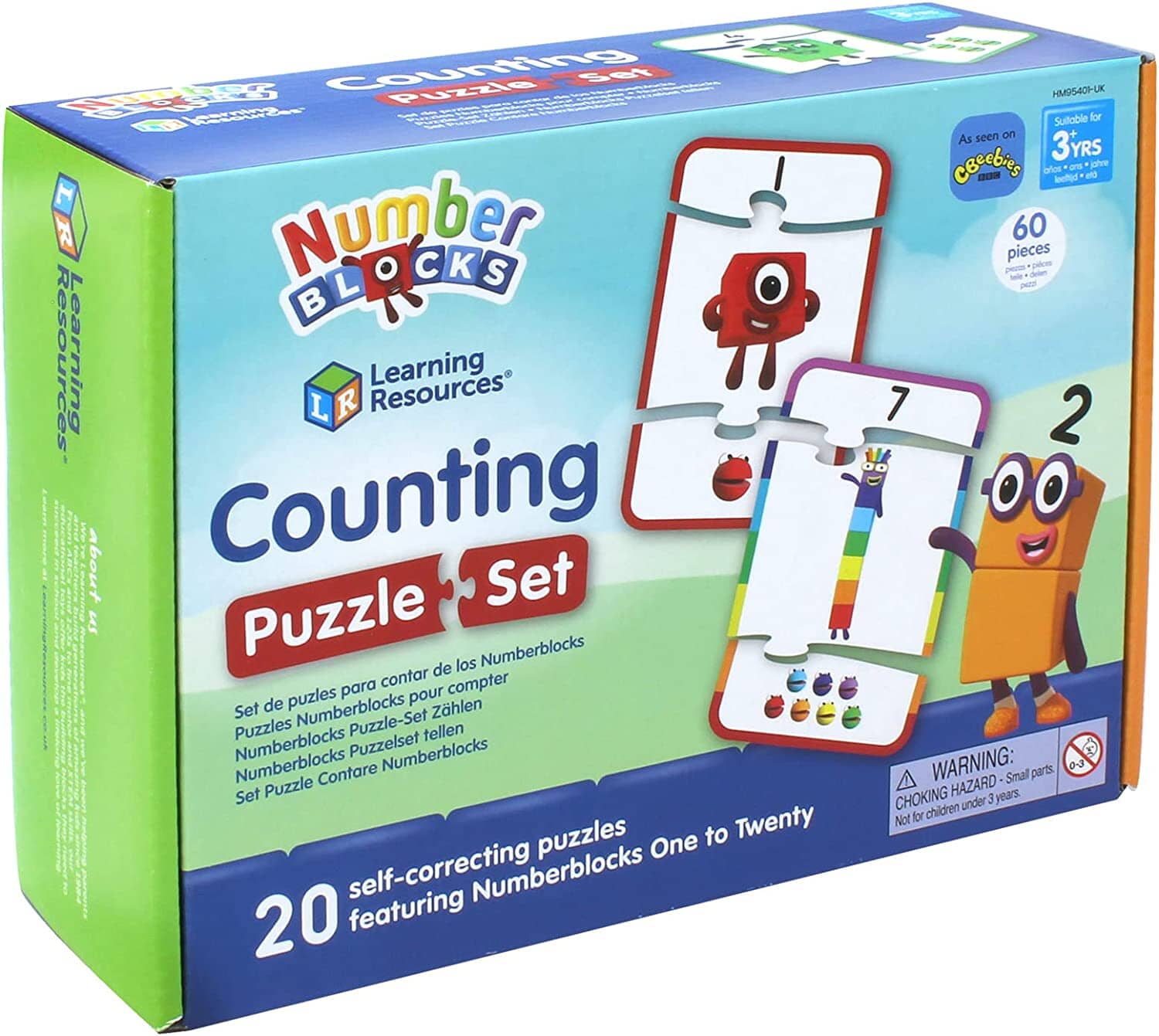
Numberblocks Counting Puzzle Set by Learning Resources - Ages 3 Years+ Learning ResourcesNUMBERBLOCKS AS SEEN ON TV: Learn to count from 1–20 with the friendly Numberblocks! These Numberblocks jigsaw puzzles are based on the friendly characters children know and love from the award-winning TV series. COUNT FROM 1–20: Make learning to count fun! As children complete the 20 counting puzzles, they’ll be counting the Numberblocks and Numberblobs, identifying each Numberblock’s Numberling, as well as building colour recognition and fine motor skills. MATCH NUMBERS & PICTURES: Match the Numberblock to its Numberling, and then see if you can match the puzzle piece with the correct number of Numberblobs to complete the puzzle. SELF-CORRECTING PUZZLES: Each of these clever self-correcting Numberblocks counting puzzles fits together in a unique way, so there’s only one right answer. INCLUDES: 20 x 3-piece puzzles. The chunky pieces are made from durable card and are easy for little hands to hold. Pieces store in the reusable packaging after play. Completed puzzles measure 15cm L x 10cm W.16,99 £*Shipping: 2,99 £Secure redirect to the provider
-
Do you prefer interior design or graphic design?
As an AI, I don't have personal preferences. However, both interior design and graphic design are important and have their own unique appeal. Interior design focuses on creating functional and aesthetically pleasing spaces, while graphic design involves creating visual concepts to communicate ideas. Both fields require creativity and attention to detail, and each offers its own set of challenges and opportunities for artistic expression. **
-
How can one transition from interior design to architecture?
One can transition from interior design to architecture by pursuing further education and obtaining a degree in architecture. This will provide a deeper understanding of structural design, building systems, and construction methods. Additionally, gaining experience in architectural firms or working on architectural projects can help in making the transition. It is also important to develop a strong portfolio that showcases architectural design skills and knowledge. Networking with architects and seeking mentorship can also be beneficial in making the transition from interior design to architecture. **
-
What is the difference between interior design and architecture?
Interior design focuses on the aesthetic and functional aspects of the interior spaces within a building, including furniture, color schemes, and decor. It involves creating a cohesive and visually appealing environment that meets the needs and preferences of the occupants. On the other hand, architecture is the art and science of designing and constructing buildings and other physical structures. It encompasses the overall design, structural integrity, and functionality of the entire building, including the exterior and interior spaces. While interior design focuses on the interior environment, architecture encompasses the entire built environment. **
-
How can one switch from studying architecture to interior design?
To switch from studying architecture to interior design, one can start by researching the specific requirements and courses needed for a degree in interior design. It may be necessary to take additional classes or pursue a new degree program focused on interior design. Building a portfolio that showcases relevant skills and projects related to interior design can also help in making the transition. Networking with professionals in the interior design field and seeking internships or job opportunities in interior design firms can provide valuable experience and connections. **
* All prices are inclusive of VAT and, if applicable, plus shipping costs. The offer information is based on the details provided by the respective shop and is updated through automated processes. Real-time updates do not occur, so deviations can occur in individual cases. ** Note: Parts of this content were created by AI.